Interior trim and door paint
What Is the Best Paint for Interior Trim and Doors?
For most Austin homes, the best choice is a premium waterborne alkyd or acrylic enamel in satin or semi-gloss. It should level smoothly, cure hard, resist sticking, and stand up to fingerprints and cleaning.
Quick answer
Choose a trim enamel, not ordinary wall paint.
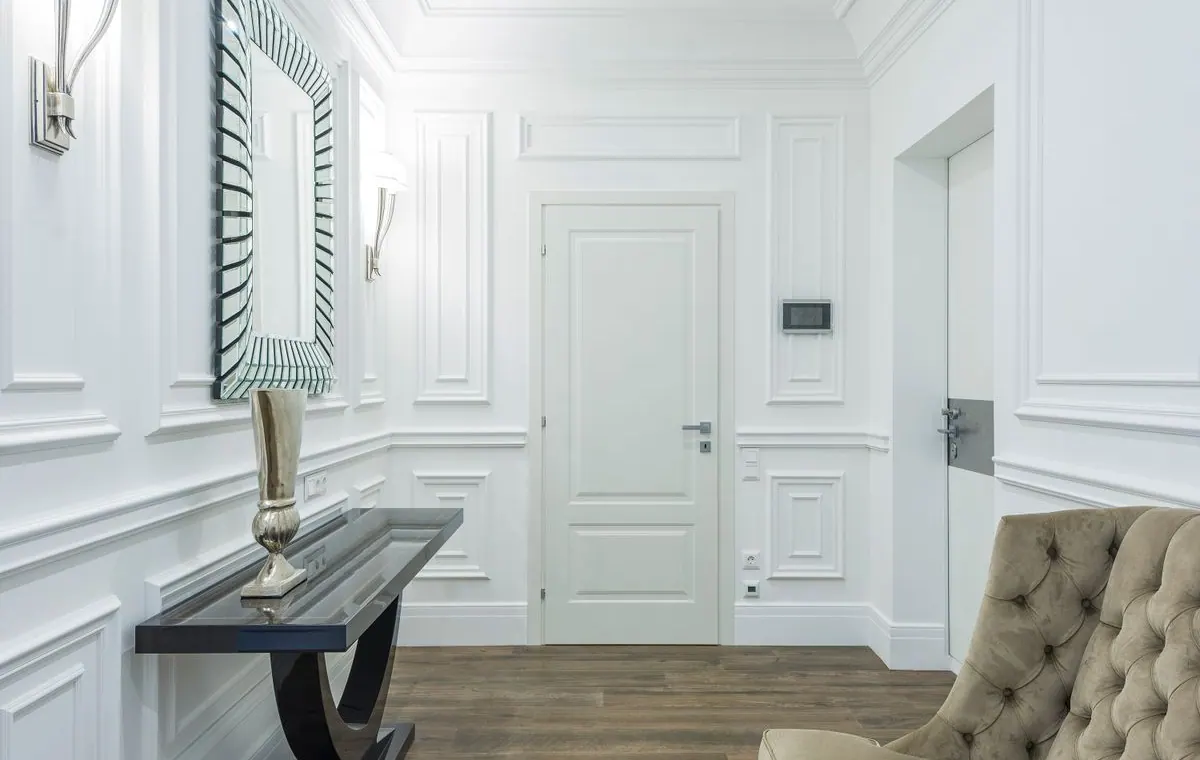
The best all-around system is a premium waterborne alkyd or acrylic enamel made for doors, trim, and cabinets. Semi-gloss gives the most traditional crisp look; satin gives a softer, quieter finish.
Here's the thing: the word “semi-gloss” on a can does not automatically make it good trim paint. A regular wall coating can stay soft, show brush drag, and stick where a door meets the frame. Product type matters just as much as sheen.
If you want a broader look at every sheen, read our matte, eggshell, satin, and semi-gloss comparison.
Paint type
What should be inside the can?
Doors and trim take more abuse than walls. Hands touch them. Shoes hit baseboards. Door edges press against stops. The finish needs to level well today and develop real hardness over the following days.
Satin vs semi-gloss
Pick the shine your home can live with.
Semi-gloss is easier to wipe clean and creates visible contrast against eggshell walls. It is an excellent choice for baseboards, casings, and busy doors, but it highlights dents and sanding scratches.
Satin is less reflective and often feels more current. It can be forgiving on older trim while still giving enough durability when you choose a quality enamel.
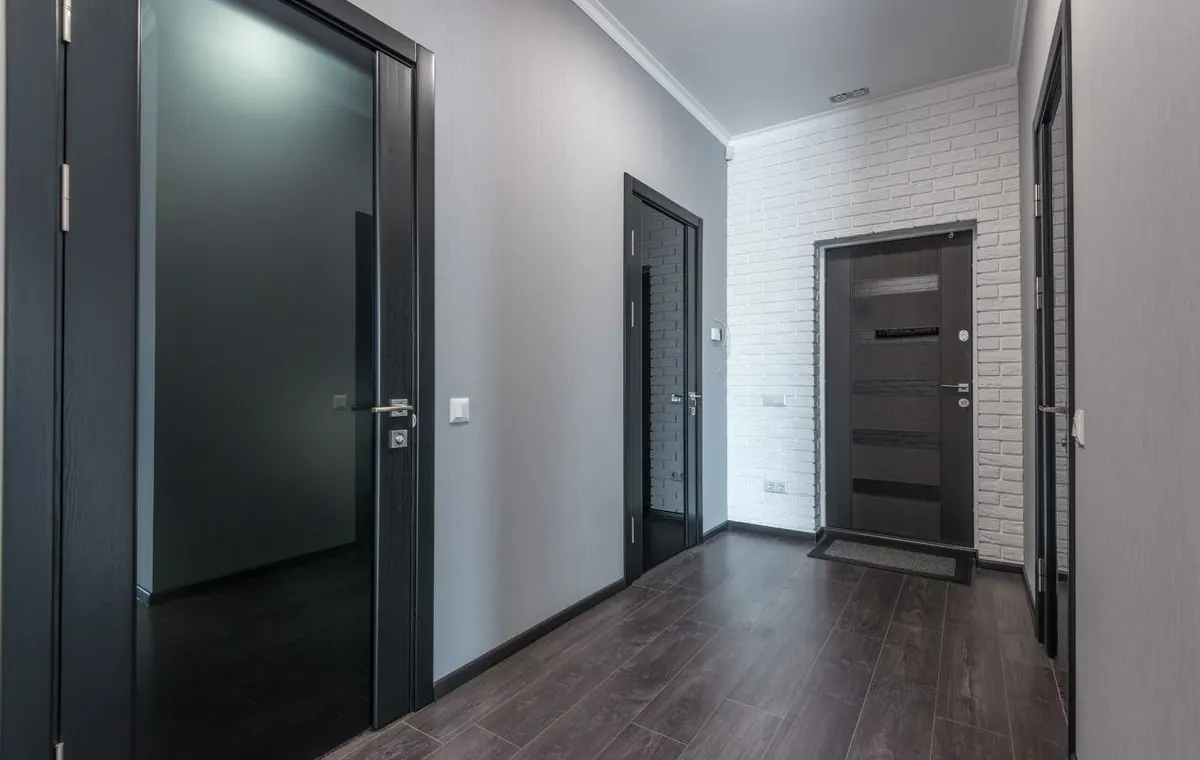
Dark doors can look especially sharp in satin because the softer reflection lets the color carry the design.
Prep and primer
A smooth finish starts before the lid opens.
Clean first
Hand oils, furniture polish, dust, and kitchen residue can ruin adhesion. Degreasing comes before sanding.
Sand for grip and smoothness
Scuff glossy coatings, feather chips, and smooth repairs. Better prep means fewer visible ridges later.
Prime the problem areas
Bare wood, tannin stains, repairs, glossy oil paint, and strong color changes may need the right primer.
Caulk selectively
Seal open joints where trim meets walls, but do not fill intentional door and cabinet reveals.
Not every surface needs a full primer coat. Our guide to when primer is actually necessary explains the decision in more detail.
Application and curing
Smooth coats, patient cure time.
Spraying can produce a factory-smooth finish, but only when the room can be masked and ventilated properly. Brushing and rolling are often more practical in occupied homes. A quality angled brush plus a fine-finish mini roller can produce excellent results.
Two controlled coats beat one heavy coat. Heavy application can sag in corners, hold texture, and extend cure time. Read our guide to how many coats of paint you really need.
Dry is not cured. A door may feel dry within hours while the coating still needs days to reach usable hardness. Austin heat may speed surface drying, but indoor humidity and limited airflow can slow the deeper cure. Avoid aggressive cleaning and tight door-to-stop contact during that early window.
Product direction
Paint brands matter. Product category matters more.
We look for proven trim enamels with smooth leveling, reliable adhesion, non-yellowing color, and enough block resistance for doors. Product lines such as Sherwin-Williams Emerald Urethane Trim Enamel are designed for this kind of work.
Benjamin Moore also explains how sheen affects appearance and durability in its paint finish guide. The final recommendation should still account for your existing coating, trim condition, color, occupancy, and preferred look.
If the project includes cabinetry, use our separate guide to the best finish for kitchen cabinets or explore our Austin cabinet painting service.
Free Austin estimate
Want crisp trim and doors without the brush marks?
Tell us what needs painting, what condition it is in, and the finish you like. We'll help you plan the prep, product, sheen, and next steps without the pressure.
FAQ
Interior trim and door paint questions.
What is the best paint for interior trim and doors?
A premium waterborne alkyd or acrylic enamel made specifically for trim, doors, and cabinets is the best all-around choice. It gives you a smoother finish and harder cure than ordinary wall paint without the odor and cleanup of traditional oil paint.
Is satin or semi-gloss better for doors and trim?
Semi-gloss is the classic choice because it is crisp, durable, and easy to wipe clean. Satin looks softer and more modern, but the product still needs to be a trim-rated enamel rather than regular satin wall paint.
Should doors and trim use the same paint?
Yes, they usually can. Using the same enamel and sheen creates a consistent finish, although an accent door may use a different color while keeping the same durable product system.
Do you need primer before painting interior trim?
Primer is needed over bare wood, repairs, stains, glossy oil coatings, and major color changes. Sound previously painted trim may only need cleaning, sanding, and a bonding primer where adhesion is uncertain.
How many coats of paint do doors and trim need?
Most properly prepared trim and doors receive two finish coats. A high-hiding color over a compatible base may cover sooner, but two thin coats usually produce better leveling, durability, and color consistency.
How long before a painted door can be closed?
Dry-to-touch time is not the same as cure time. Follow the product label, keep the door open as long as practical, and avoid letting fresh painted surfaces press tightly together until the coating has developed enough hardness.
Is spraying or brushing better for interior doors?
Spraying gives the smoothest factory-like finish when masking and ventilation are practical. A skilled painter can also produce excellent results with a quality brush and mini roller, especially when the door stays installed.
Can New Life Painting repair trim before painting?
Yes. Minor nail holes, failed caulk, dents, loose joints, and surface damage can often be repaired during prep. More extensive carpentry should be identified during the estimate so the scope is clear before painting begins.
Related painting guides and services